
NFC anchors for everyday life

Physical anchors for everything
your head would otherwise drop.

Permy is a set of small NFC tags placed where the action happens — on the fridge door, the medicine cabinet, the door frame. One tap with your phone, that's it. No app to open, nothing to fill in, no streak that can break.

Android in final stages iOS to follow Local-first, no account

01 The problem

Not forgotten as in “didn't know”.
Forgotten as in “wasn't visible”.

The yoghurt has been sitting behind the milk for two weeks. Bought, put away, out of sight, out of mind — until the smell brings it back.

And the routine you decided on rarely fails for lack of intent. It fails because at the moment that mattered, nothing was there to set it off.

Habit trackers rarely fix that, because they ask you to remember them — the exact thing that isn't working reliably right now. A note on the fridge gets closer, because it hangs where your hand goes. It just can't count anything.

Permy puts the anchor where the action happens.

The anchor hangs on the fridge door, not on your willpower.

02 How it works

Three steps, then never again.

A dim living room in the evening; a person walks through it holding a phone.
  1. 1

    Place the tag

    A Permy tag goes where the action happens: on the fridge door, on the milk carton, on the medicine cabinet, on the door frame. It needs no power, no connection and no maintenance.

  2. 2

    Tap it

    Hold your phone against it for a moment. A vibration confirms it landed. No app to open, nothing to type, nothing to dismiss.

  3. 3

    The effect

    The tag knows what it does: count along, count down, trigger or block. The app stays in the background, where it belongs.

03 One system, four applications

The same gesture. Four different effects.

What a tag does is written on the tag — not in a setting you have to remember. A new place, a new tag, done.

One tap when you open it, and Permy counts the shelf life down. Your pantry list doesn't say “opened Sept 8”, it says “4 days left” — the answer you actually need standing in front of an open fridge.

shelf life set per item · a labelled tag creates a new entry without anything being programmed

Permy draws no chain and no percentage, but growth rings. Dense weeks grow wide, thin weeks stay narrow. A narrow ring is a dry year — information, not a mark against you.

several habits at once · each gets its own band in the same ring

The tag by your front door starts the timer, adds to the shopping list, or shows the short list for heading out — keys, charger, whatever you put there. The tag on the bathroom cabinet sets the clock. The durations are yours.

timer · shopping list · reminder list · your own webhooks

One tap blocks the loud apps, a second lifts it. Open a blocked app anyway and you land back on the home screen, with a short note that clears itself. No password, no penalty time: an interruption is enough to break the reflex.

block list is yours to choose · a manual switch as a release valve when the tag isn't within reach

04 What you get

The app, the tags, and the setup.

Permy isn't just an app download. A tracker that stays on the shelf because the tags never got labelled would have helped nobody — which is why the setup is part of it.

The app

Android is in its final stages and goes to release next. iOS follows. Core features run without an account and without a connection.

The tags

A set of NFC tags, prepared for your places. No battery, no maintenance, sturdy enough for the fridge door and the door frame.

The setup

The first hour decides whether a system sticks. I go through your places with you, we stick the tags where you actually pass them, and we set shelf lives and timers to your life — not to defaults.

Permy will be a subscription for the app and a one-off purchase for the tag sets. The numbers aren't fixed yet. Everyone on the waitlist hears them first — and pays no more than what applies at launch.

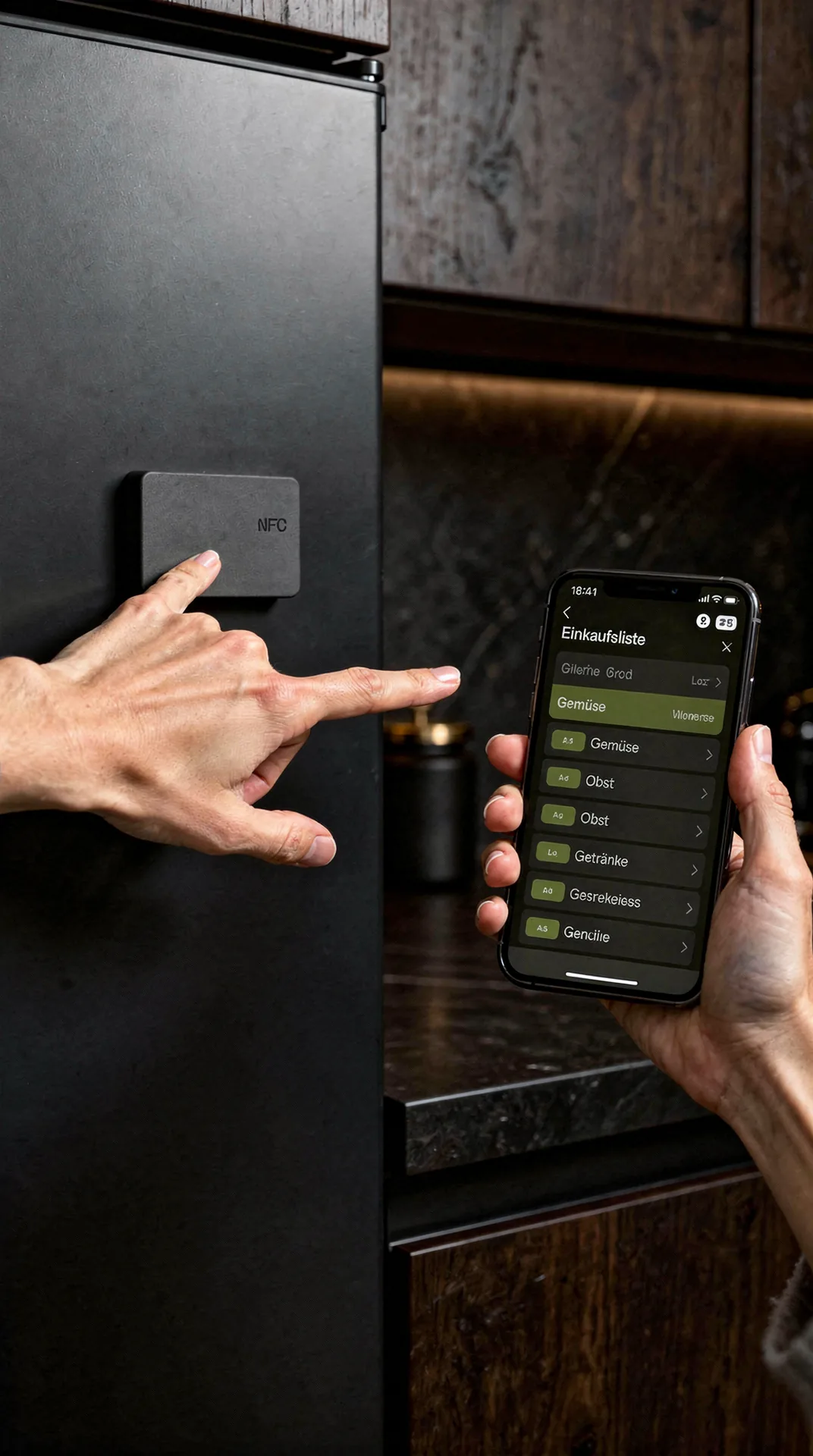
An NFC tag on a black fridge door, a hand tapping it; the other hand holds a phone showing the shopping list.
The tag sits on the fridge door — where the action happens.

No streaks. No blame. Just anchors.

05 The Permy principle

Why there are no streaks here.

Object impermanence, time blindness, shame avoidance — most apps treat these as user error to be overwritten with enough motivation. For Permy they are design parameters.

A streak knows exactly two states: intact or broken. Miss once and you are shown a zero — and many never open the app again. Not out of laziness, but because the number shames, and shame makes coming back expensive.

Tree rings tell it differently. A narrow ring is a dry year, not a failure. The tree keeps growing, and the narrow part stays visible — it just isn't judged.

So there are no points in Permy, no badges, no scoring. The rings show what was — dense, thin, with gaps — and leave the reading to you. The anchor hangs on the fridge door, not on your willpower.

06 Proof

How you can tell this is serious.

Permy isn't public yet — so there are no user numbers to show, and I'm not inventing any. What there is: decisions you can see in the product. For every one of them, the other road was the easier one.

01

Nothing turns red.

The accent colour isn't tied to any state anywhere in the app. There is no red for “overdue” and no green for “done”. States differ by opacity alone. This rule existed before the first line of code and shaped every view that came after.
02

The confirmation is a vibration, not a screen.

The order is fixed: catch double taps, vibrate, write, then everything else. The vibration comes deliberately after the double-tap check — otherwise it vibrates twice when you leave the phone resting a moment longer.

03

No server in the critical path.

What you tap is written on the device before anything touches the network. If a connection drops, nothing rolls back and nothing is lost. Core features need neither account nor connection.

04

The focus block ejects instead of locking.

The first version only laid an explanation over the blocked app — loading apps pushed in front of it. The obvious answer would have been a hard lock. Instead Permy returns you to the home screen and explains itself briefly. An interruption, not a cage.

104 core tests green, from ring geometry to the data export
31 days of continuous use across six tags, without a single lost tap
0 taps that have left the device

These numbers say the engineering holds. They don't yet say how Permy feels after months of real life — only the first round will. That's why it's small.

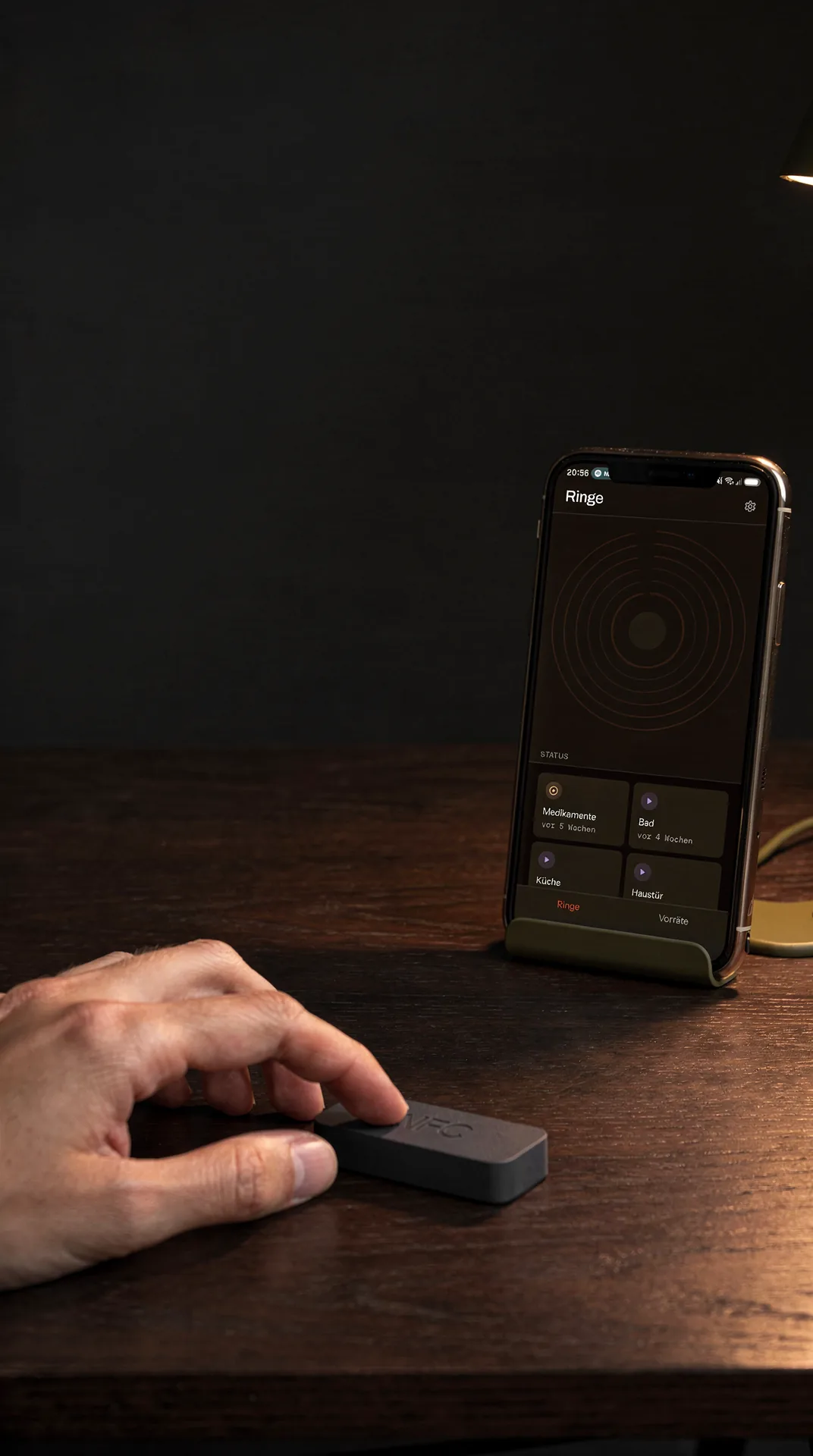
A phone on a desk showing Permy's rings screen with growth rings and status tiles, a hand beside it on an NFC tag.
The ring after four weeks. The narrow part is a week where little happened — it is shown, not flagged.
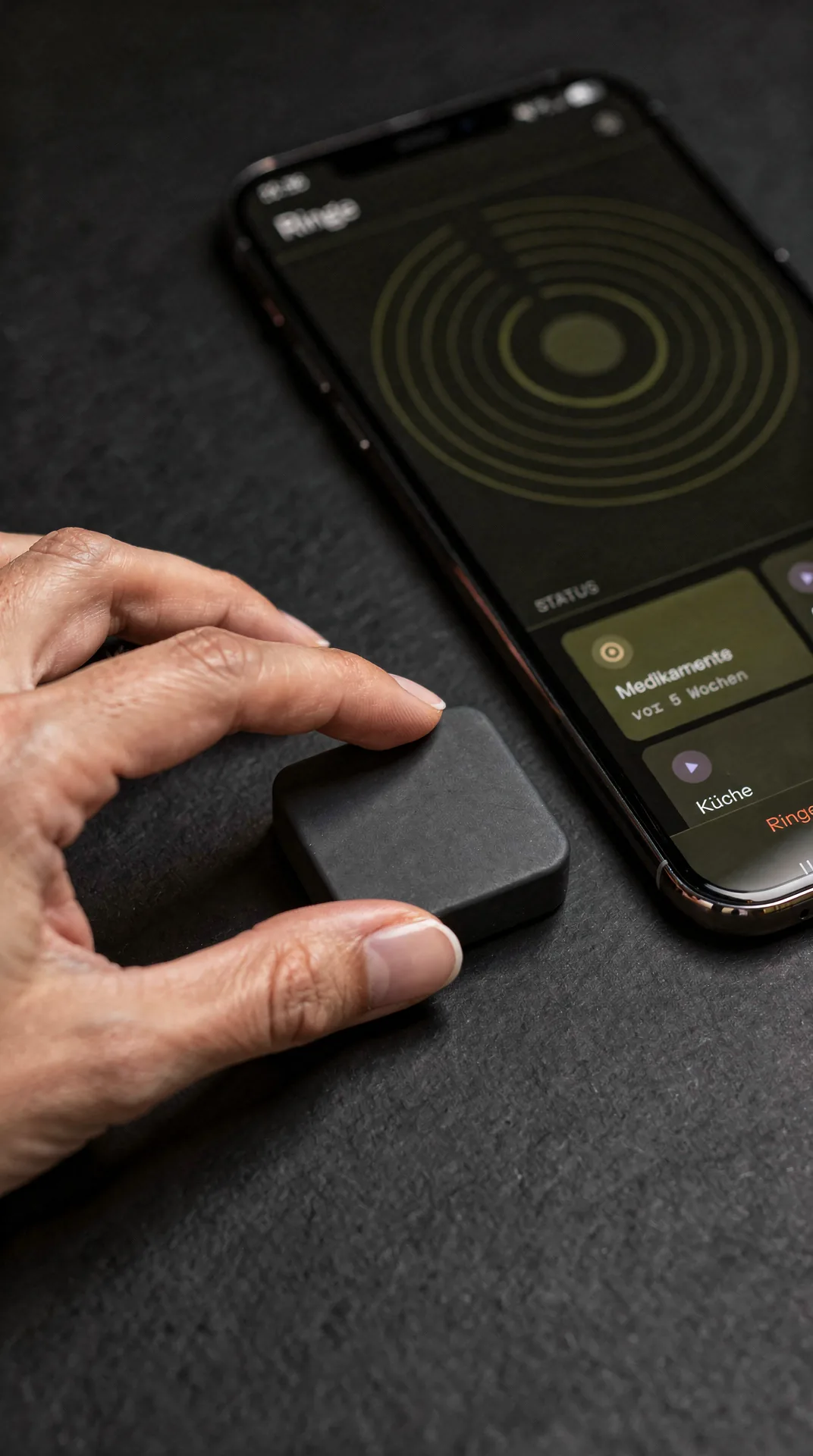
Close-up of a black NFC tag between two fingers, next to a phone showing the rings screen.
The tag itself: no battery, no maintenance, no connection.

07 Data

Your data stays on your device.

Local-first isn't a footnote in Permy, it's the architecture. What you tap is nobody else's business — mine included.

  • 01

    No account for the core features. No server that knows your habits.

  • 02

    Rings, countdowns and readings are produced on the phone, offline.

  • 03

    Export any time, in an open format. Your rings are yours — including when you leave.

08 Early access

Permy isn't live yet.
The waitlist is the only way in.

Android goes to release next, and the first round stays small — because setup involves a person, and a person doesn't scale. Everyone on the list gets in first — and gets their first tag set free.

Which anchor first?

One email at launch, nothing else. No newsletter, no sequence afterwards. The mail comes straight to me.

Rather ask first? Write to me directly: dennis.schoener@gmail.com